
Protect Your Gut: The Hidden Dangers of Food Additives
Additives from artificial sweeteners to emulsifiers and preservatives are omnipresent in our ingredient lists. These disrupt our microbiome and gut health. Learn more here.
Introduction to Gut Health: Understanding Your Gut Microbiome
Deep within our digestive system lies a bustling metropolis of trillions of microorganisms – the gut microbiota. This complex ecosystem, primarily composed of bacteria, fungi, and viruses, is not merely a passive resident; it plays a pivotal role in our health, wielding influence over digestion, immunity, mental well-being, and even our risk of chronic diseases. However, this intricate world faces a formidable challenge in the modern era: the ubiquity of processed foods and their accompanying arsenal of food additives.
You can learn more about other gut disruptors in our previous blogs such as home & care products or drugs & medications.
Harmful Food Additives: What to Avoid for Gut Health
The past century has witnessed an unprecedented rise in the use of food additives – substances incorporated into food products to enhance flavor, texture, appearance, and shelf life. While some additives are benign, many synthetic ones raise serious concerns about their long-term impact on gut health and overall well-being.
Some Food Additives to Avoid below.
Figure: Impact of food additives on the gut
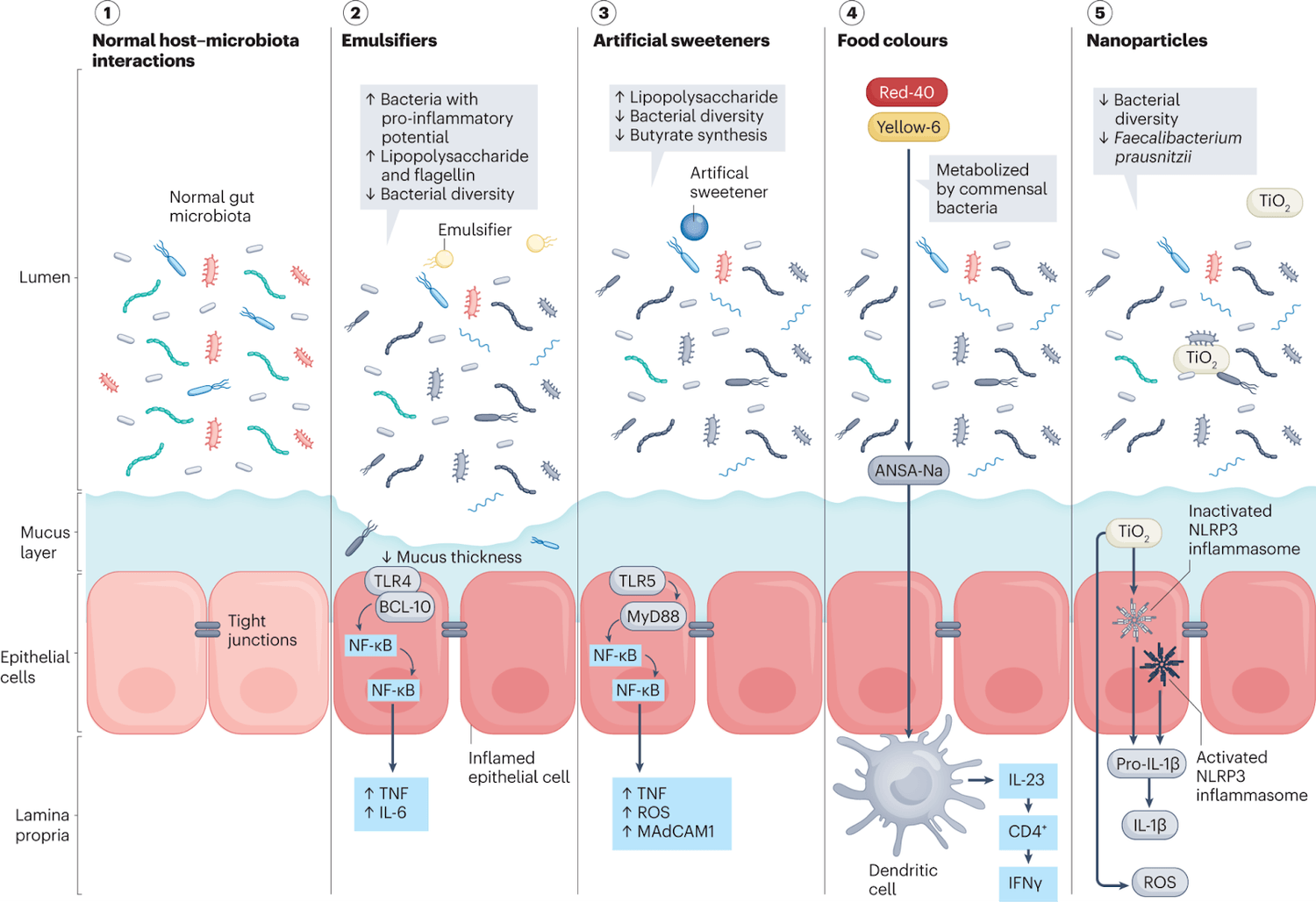
Artificial Sweeteners: Not So Sweet for Your Gut Bacteria
Often touted as a healthy alternative to sugar, artificial sweeteners like aspartame, sucralose, and saccharin [R] may not be as innocent as they seem. Research indicates they can alter gut microbiota composition, potentially contributing to glucose intolerance [R], metabolic syndrome [R], and even changes in behavior and mood.
Emulsifiers and Gut Inflammation: What the Research Says
Figure: Impact of Emulsifiers on the Gut
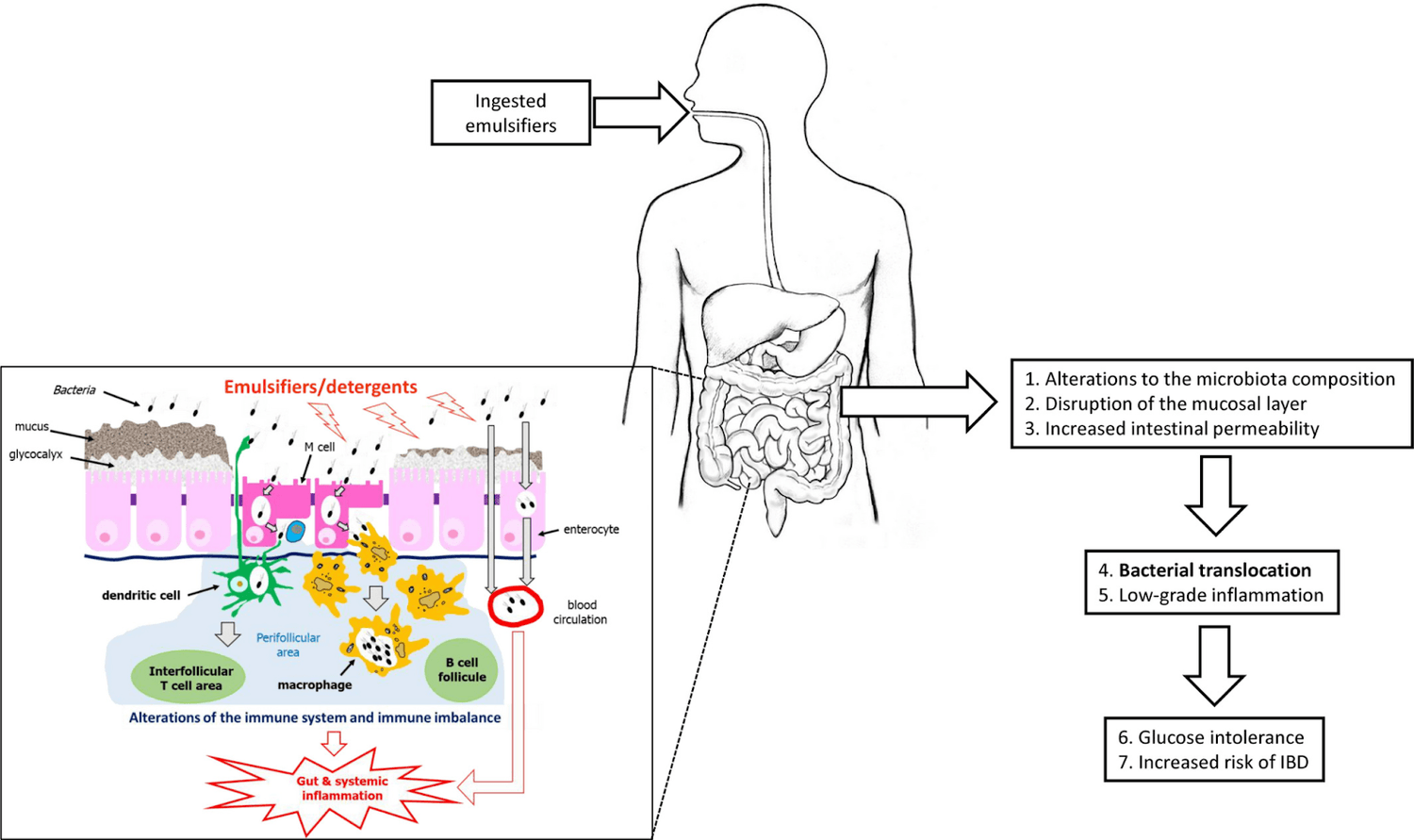
Often touted as a healthy alternative to sugar, artificial sweeteners like aspartame, sucralose, and saccharin [R] may not be as innocent as they seem. Research indicates they can alter gut microbiota composition, potentially contributing to glucose intolerance [R], metabolic syndrome [R], and even changes in behavior and mood.
How Food Dyes Disrupt Your Gut
While adding visual appeal to food, certain colorants like titanium dioxide and azo dyes [R] have been linked to gut inflammation and dysbiosis. The vibrant colors may come at a cost to our gut health.
The Impact of Other Additives on the Gut
Impact on Gut Microbiome
Gut Microbiome’s role
A diverse and balanced gut microbiota is the cornerstone of good health. Beneficial bacteria, such as Bifidobacterium and Lactobacillus, perform vital functions, including:
Digestion and Nutrient Absorption: They break down complex carbohydrates and fibers, aiding digestion and facilitating nutrient absorption.
Immune System Regulation: They help train and regulate the immune system, protecting us from pathogens and preventing autoimmune reactions.
Protection Against Pathogens: They compete with harmful bacteria for resources and space, preventing their overgrowth and maintaining gut health.
Production of SCFAs: They ferment dietary fiber, producing short-chain fatty acids (SCFAs) like butyrate, which nourish colon cells, reduce inflammation, and provide numerous health benefits.
Impact of Food Additives on Gut Microbiome
Food additives can disrupt this harmonious balance, leading to dysbiosis [R], an imbalance with cascading consequences:
Loss of Diversity: A less diverse microbiota weakens the gut’s resilience and ability to adapt to changes, making it more susceptible to pathogens and inflammation.
Leaky Gut: The thinning of the mucus layer and disruption of the gut barrier’s integrity [R] create a “leaky gut,” allowing harmful substances to pass into the body, triggering inflammation and immune responses.
Reduced SCFA Production: Disrupted gut microbiota leads to reduced production of SCFAs, depriving the colon of essential nutrients and anti-inflammatory benefits.
Gut Health and Chronic Diseases: The Link Explained
The consequences of a disrupted gut extend far beyond digestive discomfort, causing a ripple effect throughout the body:
Chronic Disease Risk & Gut Health
A growing body of research links gut dysbiosis and inflammation to an increased risk of various chronic diseases:
Metabolic Syndrome: This cluster of conditions, including obesity, insulin resistance, high blood pressure, and abnormal cholesterol levels, is associated with an increased risk of heart disease, stroke, and type 2 diabetes. Disrupted gut microbiota and inflammation can be significant contributors [R].
Autoimmune Diseases: Emerging research suggests a link between gut dysbiosis and the development of autoimmune diseases, where the immune system mistakenly attacks healthy cells.
Mental Health & Gut Health
The gut-brain axis, a bidirectional communication pathway, intricately connects the gut and the brain, influencing mood, cognition, and behavior. Disruptions in gut health, such as dysbiosis and inflammation, can disrupt this communication, potentially contributing to:
Anxiety and Depression: Imbalances in gut microbiota and inflammation can affect neurotransmitter production and signaling, potentially playing a role in the development of anxiety and depression. [R]
Autism Spectrum Disorder (ASD): Some studies suggest a link between alterations in gut microbiota composition and ASD, although further research is needed to fully understand the mechanisms involved. [R]
Other Potential Impacts
Food Sensitivities and Allergies: A leaky gut allows undigested food particles and allergens to enter the body, potentially triggering immune responses and contributing to food sensitivities and allergies.
Nutritional Deficiencies: Gut dysbiosis can impair nutrient absorption, leading to deficiencies in essential vitamins and minerals, impacting overall health and well-being.
Why Should You Care? The health of your gut microbiome is intrinsically linked to your overall health. A healthy gut contributes to a strong immune system, efficient digestion, stable mood, and reduced risk of chronic diseases. Taking care of your gut is an investment in your long-term health and well-being.
I am a scientist, educator, and certified functional & nutritional medicine practitioner.
I use my experience working with clients, my rigorous education in science & the fundamentals of medicine, and my continuous research in all things health/vitality to help you express a more vibrant li
Join my email list
Receive vitality & performance tips


